
Gartic.io - Draw, Guess, WIN
GarticTrivia
3.91.09K Reviews
- Version
- 2.2.9
- Installs
- 10.00M
- Age Rating
- Everyone
Screenshots
Our Review of Gartic.io - Draw, Guess, WIN
 Analysis by Appyee
I enjoy trivia games most when they make me think quickly without turning a quiet evening into a serious competition. Gartic.io takes that idea in a more visual direction: one player draws, the others try to guess, and the round keeps moving through a shared online room. It is a free game in the trivia category from Gartic, available for Everyone, and it has been around long enough to build a sizeable audience, with over ten million installs and an average rating of 3.9 from around one hundred thirty-six thousand ratings.
That popularity makes sense, but it does not mean every session is effortless. In my experience, the biggest problems are often practical rather than related to the game itself: joining the wrong room, misunderstanding what is happening during a turn, using a weak connection, or expecting a drawing game to behave like a conventional quiz. Once I approached it with those points in mind, the experience became much easier to judge fairly.
Getting into a room without unnecessary friction
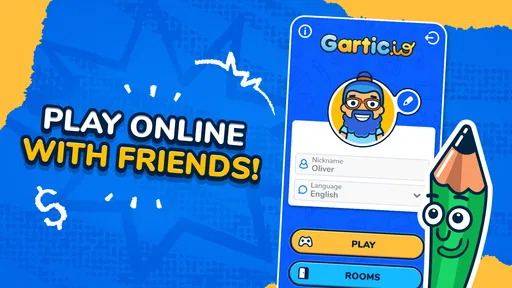
The first thing I would tell a new player is not to rush through the opening screen. Gartic.io is built around online play, so the quality of a session depends heavily on entering the intended room and understanding whether you are there to draw or guess. If you are playing with friends, agree beforehand on how everyone will identify the same room. A short message in your group chat can prevent the common situation where one person is waiting in a different match.
Joining a room is only the beginning. The game asks you to switch between two very different mental modes. When I am drawing, I have to communicate an idea with limited visual detail. When I am guessing, I need to watch the drawing develop while entering answers quickly. A player who treats every turn like a normal multiple-choice trivia question may find the pace confusing at first, because the answer is shaped by another person’s drawing rather than presented directly.
That change of pace is also the reason the game works well for casual groups. Nobody needs to be an expert in a particular subject. A good round can come from recognizing a simple visual clue, interpreting an imperfect sketch, or finding a word before someone else does. The same looseness that makes it accessible can also make it feel chaotic, especially when several players submit guesses close together.
If the room seems empty, slow, or unrelated to what you expected, I would first leave and re-enter rather than repeatedly tapping controls. Check that you used the intended room information and that the game has finished loading. This is a small habit, but it avoids wasting time trying to fix a match that was never the right match in the first place.
What the first few rounds really teach you
The opening rounds are less about winning than learning the rhythm. I recommend watching how quickly the drawing changes, how much time you have to type a guess, and whether your friends are using short or descriptive answers. This helps you adapt without blaming yourself for missing an early word.
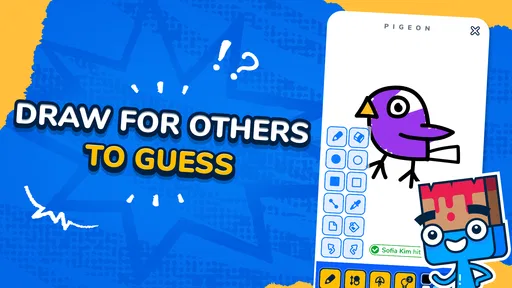
As a drawer, I found that recognizable shapes are more useful than ambitious artwork. Start with the main outline, then add one or two details that distinguish the object. Spending too long on decoration can leave guessers with less time to respond. As a guesser, I try broad possibilities first and then refine them as new marks appear. That approach is more reliable than waiting for a perfect drawing.
There is also a social adjustment. Friends may use inside jokes, unusual interpretations, or deliberately misleading sketches. That can be funny with the right group and irritating with the wrong one. If you want a calm, predictable quiz, this is not the ideal format. If you enjoy playful confusion and quick reactions, the uncertainty is part of the appeal.
Checks worth making before blaming the game
Before starting a longer session, I would make three simple checks. First, make sure the device is connected properly and that other apps are not consuming the connection in the background. Second, close anything that might interrupt play with notifications or a sudden switch away from the game. Third, confirm that everyone in the group has joined the same room and understands when the round has begun.
These checks sound obvious, but online drawing games expose connection problems quickly. A delayed drawing can make a guess impossible, while a late answer can look like a mistake even when the player knew the word. If only one person is experiencing sluggish updates, the issue may be local to that device or connection rather than something affecting the whole room.
The Android requirements are relatively accessible: the listed minimum operating system is Android 7.0, which means many older compatible devices can run it. The current version is 2.2.9. I would still keep the app updated through the normal store process when an update is available, because version consistency can matter when several friends are trying to play together. I would not treat an older phone as automatically unsuitable, but I would be realistic about its connection and responsiveness.
On iOS or Android, the same preparation principle applies: use a stable connection, avoid switching repeatedly between apps, and give the game a moment to settle after opening it. I prefer doing this before inviting friends rather than after everyone is waiting. It makes the session feel organized without turning a casual game into a technical project.
How to recover when a round goes wrong
When a session becomes confusing, the best recovery depends on what actually failed. If the drawing is visible but guesses are not registering, I would first check whether the turn is still active and whether the answer field is being used correctly. If the whole room appears frozen, I would wait briefly before leaving, since immediately rejoining can create more confusion about who is still present.
If you do need to restart, tell the group clearly before doing so. One person leaving and returning silently can make others think the match has ended or that they joined incorrectly. A simple message such as “I am rejoining the room” is surprisingly useful in a group session.
For a family or friend group, I recommend treating the first failed attempt as a setup round. Use it to confirm that everyone can see the drawing, submit a guess, and recognize whose turn it is. That is more efficient than trying to make the first round competitive while people are still learning the interface.
Another practical tip is to avoid changing several things at once. If the game is slow, do not immediately switch networks, close the app, restart the device, and ask everyone else to leave. Try one simple step, observe the result, and then continue. This makes it easier to tell whether the problem was a temporary connection issue, a room issue, or a device issue.
When a friend cannot join, I would check the room information first, then ask that person to reopen the game and try again. If everyone else is playing normally, the problem is less likely to be the entire service. If several people lose access at the same time, waiting and retrying later is more sensible than repeatedly changing individual settings.
Situations where the app may not be the cause
It is easy to blame Gartic.io when a guess arrives late or a room does not behave as expected, but online play involves several moving parts. A crowded home network, weak mobile signal, background downloads, or a device struggling with multiple open apps can all affect the experience. I have learned to compare what each player sees before deciding that the game is broken.
If one person sees a frozen screen while the rest of the room continues, I would focus troubleshooting on that person’s device and connection. If everyone sees the same interruption, the group can leave the game alone for a short time and try again together. This distinction saves effort and avoids making one player repeatedly reinstall or reset things without a clear reason.
There is also a difference between a technical fault and a design limitation. A drawing that is hard to understand is not necessarily a loading problem. A guess that fails may simply be too late or too different from the intended word. The game’s charm comes partly from interpreting imperfect drawings, so not every confusing moment needs fixing.
Players should also consider the social environment. Gartic.io is more enjoyable when everyone accepts that drawings will vary in quality and that quick guesses can be wrong. With very young players, I would stay involved and help explain the turn structure, even though the content rating is Everyone. The age label indicates broad accessibility, but younger children may still need guidance with online interaction and basic troubleshooting.
Where it fits among trivia and party games
Compared with a standard trivia app, this game relies less on stored knowledge and more on visual interpretation, timing, and group chemistry. A traditional quiz is usually better when you want clearly defined answers, a measured pace, or a solo session. Gartic.io is stronger when the goal is to create conversation and shared reactions.
It also differs from a dedicated drawing tool because the drawing is not the final product. The sketch exists to help other players guess. That changes how I use the controls and how I judge success. Precision matters less than clarity, and a funny mistake can be more memorable than a technically good drawing.
Against other party games, its main advantage is the low barrier to participation. You do not need to learn a complicated rule set before contributing. The trade-off is that the quality of the session depends on the people in the room. A lively group can make a simple prompt entertaining, while a quiet or disconnected group may expose the game’s limited depth.
I would skip it if you want a substantial solo campaign, detailed progression, or a carefully balanced competitive system. I would also choose another option for a formal knowledge test where every answer needs to be unambiguous. Gartic.io is at its best as a social break, not as a replacement for a serious quiz platform.
Small habits that make sessions better
For drawing turns, I use a simple three-step workflow: establish the largest shape first, add the feature that makes the object recognizable, and stop once the idea is clear. This prevents the common mistake of filling the screen with details that arrive too late to help anyone guess.
For guessing turns, I watch the order in which marks appear rather than focusing only on the finished image. The first stroke may show whether the drawer is making an object, symbol, or scene. I also submit a reasonable answer early and refine my thinking afterward. Waiting for certainty is often worse than making a quick, informed attempt.
For groups, I suggest agreeing on a relaxed rule about accidental guesses and unclear drawings before beginning. That avoids arguments during the match. If the group is using the game for a short break, decide how many rounds you want before starting; otherwise, the quick-turn format can easily stretch longer than planned.
One useful everyday scenario is a small group of friends waiting for a shared online activity to begin. Instead of opening a complicated multiplayer game, everyone joins a room, plays a few drawing-and-guessing rounds, and keeps the conversation going between turns. The game works particularly well there because participation is intermittent: even when you are not drawing, you remain involved by interpreting the sketch and watching the guesses.
My practical verdict after using it
Gartic.io is a good free choice for people who want a lightweight online trivia experience with a strong drawing and party-game element. Gartic has kept the central idea easy to understand, and the broad age rating makes it approachable for mixed groups. Its audience size, including more than ten million installs, suggests that finding people familiar with the format should not be difficult.
My recommendation comes with a clear condition: approach it as a social game, not as a polished solo quiz. The best moments come from friends reacting to strange drawings, recognizing an answer just in time, and laughing at interpretations that were technically wrong but visually convincing. The weakest moments come from unclear room setup, unstable connections, or players expecting every round to feel precise and fair.
The average rating of 3.9 from around one hundred thirty-six thousand ratings reflects that mixed experience reasonably well. I would not read it as a warning to avoid the game, but I also would not assume that popularity removes the occasional friction. The free price makes trying it low-risk, and the listed release date of July 14, 2017 shows that it is an established title rather than a brand-new experiment.
In the end, I would install it for a friend group, a family session with some guidance, or a quick break when conversation matters as much as winning. I would look elsewhere for deep trivia, solo progression, or highly controlled competition. If you check the room, prepare the connection, and accept that imperfect drawings are part of the fun, Gartic.io is easiest to enjoy when you stop looking for a perfect quiz and start treating each round as a shared guessing game.
Verdict
Strengths of Gartic.io - Draw, Guess, WIN
- Simple drawing tools make it easy for anyone to join a match.
- Quick rounds keep games engaging without requiring a long time commitment.
- Public and private rooms support different multiplayer preferences.
- Works well for casual play with friends or strangers.
- Guessing correctly can earn points and create exciting comebacks.
Limitations of Gartic.io - Draw, Guess, WIN
- Public rooms may include inappropriate drawings or offensive guesses.
- Random word choices can sometimes feel repetitive after extended play.
- A stable internet connection is needed for smooth real-time matches.
- Ads may interrupt the experience, especially for frequent players.
- The small drawing area can make detailed illustrations difficult to create.
Similar Picks in This Category
View All
Millionaire 2026 Quiz & Trivia
Quiz & Trivia Games by Submarine Apps4.5

Brain Test 2: Tricky Stories
Unico Studio4.7

Trivia Crack: Brain Quiz Games
etermax4.4

QuizzLand. Quiz & Trivia game
Quiz & Trivia Games by Mno Go Apps4.8

Brain Test: Tricky Puzzles
Unico Studio4.7

Logo Quiz
bubble quiz games4.5
Frequently Asked Questions
What is Gartic.io and how does the game work?
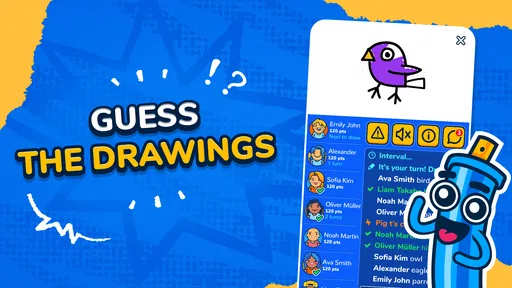
Gartic.io is an online multiplayer drawing and guessing game. In each round, one player receives a word and draws it while the others try to identify it by typing guesses in the chat. Points are awarded for correct answers and for drawings that help others guess quickly. The player with the highest score at the end wins.
Can I play Gartic.io with friends or only with strangers?
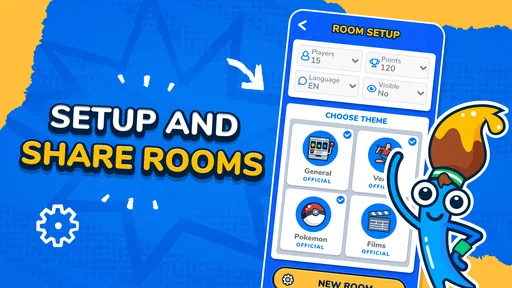
You can play Gartic.io with both friends and random players. The game includes public rooms where you can join an existing match, as well as options for creating or entering private rooms using a link or room code. Private games are useful for family, classmates, or friends who want to play together without unfamiliar participants.
Is Gartic.io free to download and play?
Yes, Gartic.io is generally free to download and play on supported Android and iOS devices. You can access the main drawing and guessing gameplay without purchasing a premium subscription. However, the app may include advertising or optional features, and availability, in-app purchases, and advertising policies can vary depending on your device, region, and version of the application.
Does Gartic.io require an internet connection?
Yes, Gartic.io requires an active internet connection for its main multiplayer features. Drawings, guesses, room access, player scores, and communication with other participants are handled online. It is therefore best played over a reliable Wi-Fi or mobile data connection. If your connection is unstable, you may experience delays, disconnections, or difficulty joining a room.
Is Gartic.io suitable for children and is the chat safe?
Gartic.io is easy for children to understand, but parents should remember that public rooms include interaction with other online players. The chat and drawings may not always be appropriate because users create the content themselves. For younger players, private rooms with trusted friends or family are a safer choice. Parents should also review the app’s reporting, blocking, and privacy options.
Play our best games!


